
There’s a very specific kind of peace that comes from a pantry you can trust. Not the kind that’s overflowing with random jars you never use, but the kind that makes dinner feel easy: a few long-lasting staples that can turn “I have nothing in the house” into a warm, satisfying meal.
And yes—this is exactly how I cook in Amsterdam.
Even though my food is inspired by Italian tradition and shaped by Dutch seasons, pantry staples aren’t really local or seasonal (they’re the backbone that lets the seasonal stuff shine). When I have these ingredients at home, I can buy a few beautiful vegetables at the market and still make something that tastes deeply Italian.
Quick answer
An Italian pantry is built on a few long-lasting staples—olive oil, tomatoes, pasta/rice, legumes, and Parmigiano—plus “flavour boosters” like anchovies, capers, and good jars. With these at home, you can turn seasonal vegetables into an Italian-style meal fast.
This post is for you if you want to:
- Cook more Italian-style meals without overthinking
- Spend smarter (fewer ingredients, better quality)
- Waste less (pantry-first meals = fewer last-minute takeaways)
- Make simple food taste proper with the right finishing touches
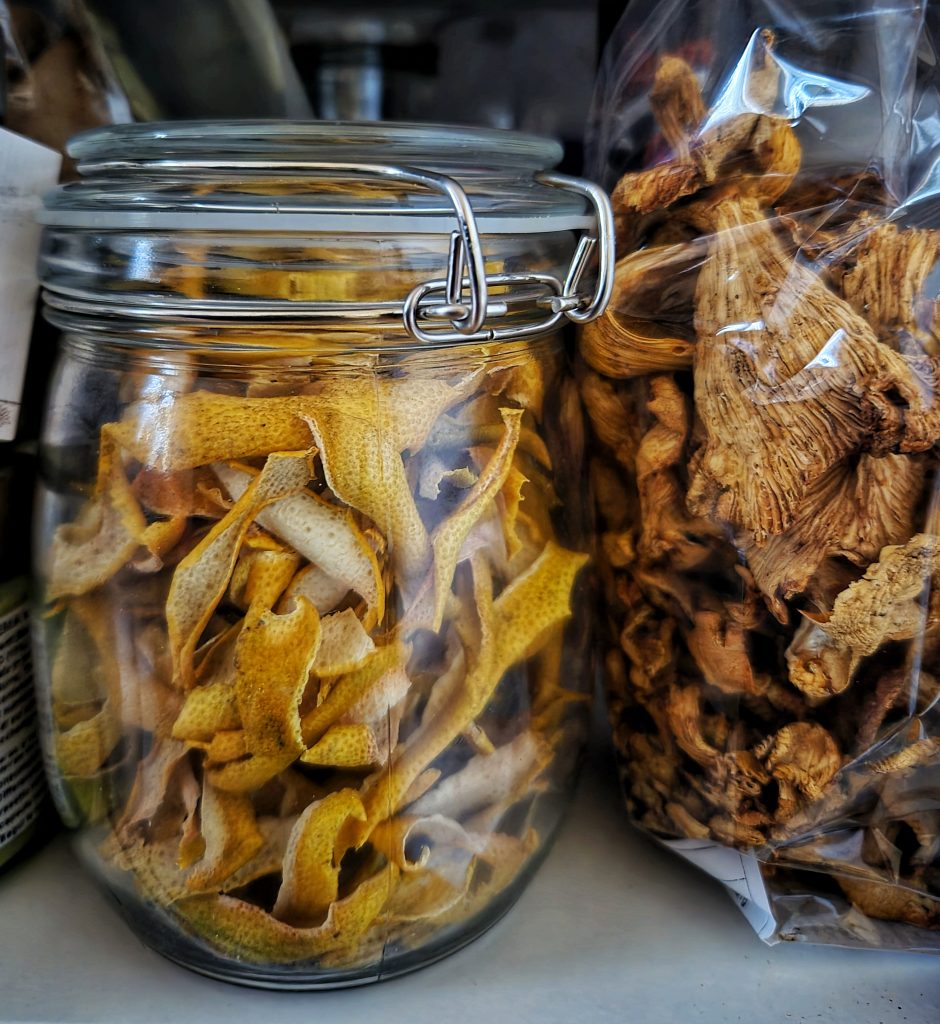
Starter Italian pantry: 5 essentials to buy first
If you’re building your pantry from scratch (or you just want to simplify), start here:
- Extra virgin olive oil
- Canned tomatoes or passata
- Pasta + one tiny soup shape (like risoni)
- Dried legumes (beans/chickpeas/lentils)
- Parmigiano Reggiano (and keep the rind habit)
1) Extra virgin olive oil
If there’s one ingredient that defines Italian cooking, it’s good olive oil.
Use it for: starting a soffritto, finishing soups, dressing salads, and turning simple beans into something you actually crave.
If you can, keep two: one everyday bottle for cooking, and one special bottle for finishing.
2) Garlic + sweet onions
In Italian cooking, garlic isn’t always the star—but it’s often the first note. Sweet onions (or shallots) are just as important: they melt into sauces, soups, beans, and braises and create that gentle, rounded base we all love.
Use it for: soffritto, tomato sauce, beans, and basically anything that needs a warm foundation.
This is the duo that makes a pantry meal taste “proper.”
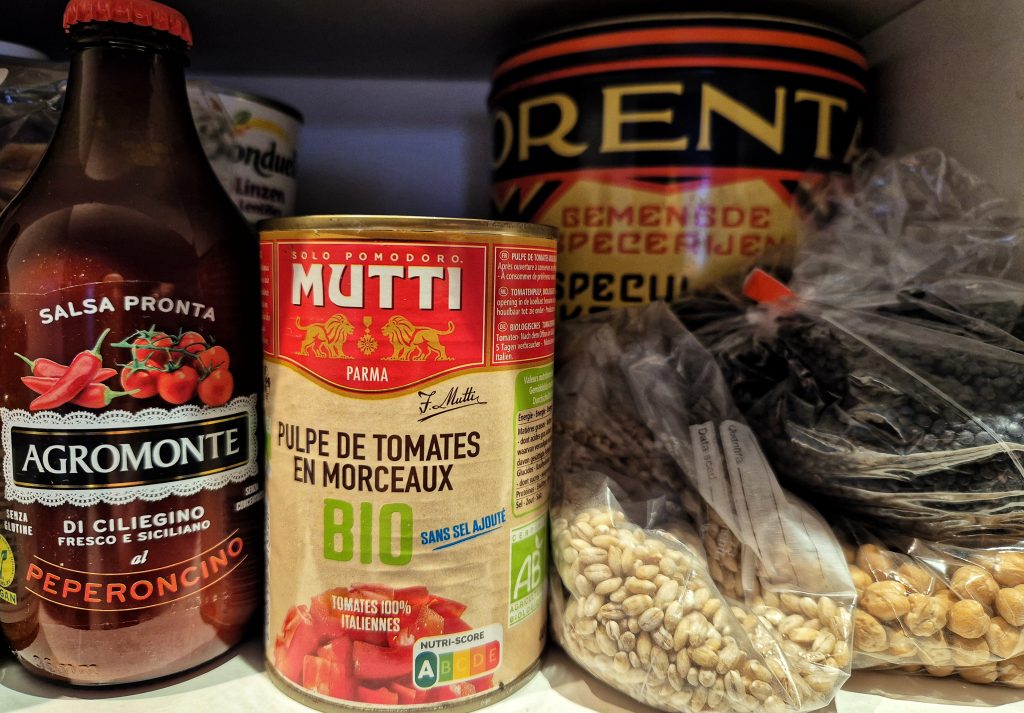
3) Canned tomatoes and/or passata
Whole peeled tomatoes, chopped tomatoes, passata—choose what you use most often. This is the backbone of so many Italian dishes: a simple tomato sauce, a minestrone base, a quick braise, or a “clean-out-the-fridge” pasta.
Use it for: quick tomato sauce, soups, braises, and stews.
My forever tip: start with a simple soffritto (olive oil + onion + garlic), add tomatoes/passata, salt, and if your tomatoes are a little sharp, a tiny pinch of sugar can help soften the acidity. Finish with fresh basil if you have it—or if you don’t, a little stock cube can add warmth and depth.
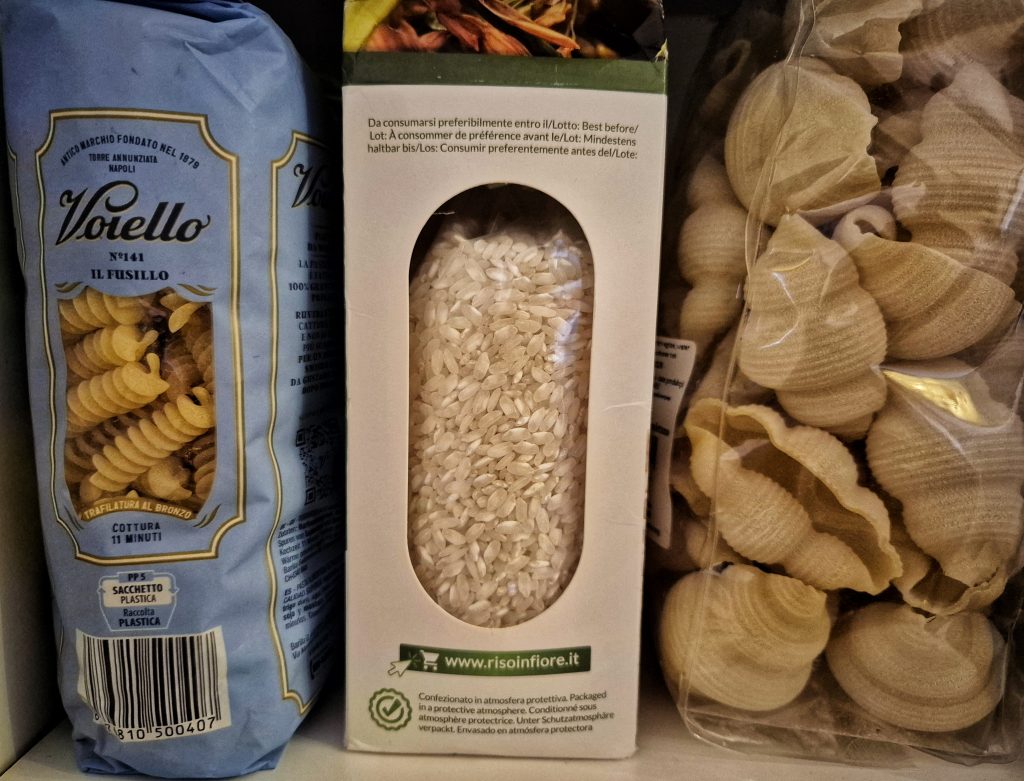
4) Pasta and rice (plus one tiny shape)
Yes, I make fresh pasta often—but dried pasta is still a pantry hero. It’s reliable, quick, and perfect for those “feed me now” moments. My go-to supermarket brands? Molisana & Rummo.
Use it for: weeknight pasta, brothy soups, and risotto nights.
Keep a couple of short shapes you like (whatever you’ll actually reach for), plus one tiny shape for soups and brothy comfort meals. I love risoni (the real name of what many people call “orzo”).
And for risotto nights: a bag of Arborio or Carnaroli means you’re always one pot away from something cozy.
5) Dried legumes (beans, chickpeas, lentils, peas) + a barley/legume soup mix
Legumes are the definition of Italian comfort food—and honestly, one of the most satisfying and healthy pantry staples you can keep.
- Dried beans (cannellini, borlotti, etc.)
- Chickpeas
- Lentils
- Dried peas
Use it for: soups, stews, salads, and hearty “I need real food” dinners.
Just don’t forget (like I sometimes do): soak most dried beans and chickpeas overnight. It makes cooking easier and the texture so much better.
Bonus (and very “Italian countryside”): a dried soup mix with legumes + barley (often sold as a “minestrone mix”—and yes, it reminds me of minestrone alla contadina). It’s the kind of pantry ingredient that turns into dinner with almost no effort.
6) Parmigiano Reggiano (and the rind)
Parmigiano is more than a topping. It’s seasoning. It’s depth. It’s the thing that makes a simple pasta taste like it has a secret.
Use it for: finishing pasta, enriching soups, and adding savoury depth to beans.
And the rind? Never throw it away. Keep rinds in the freezer and drop one into soups, tomato sauce, or beans while they cook for a slow, savoury richness.
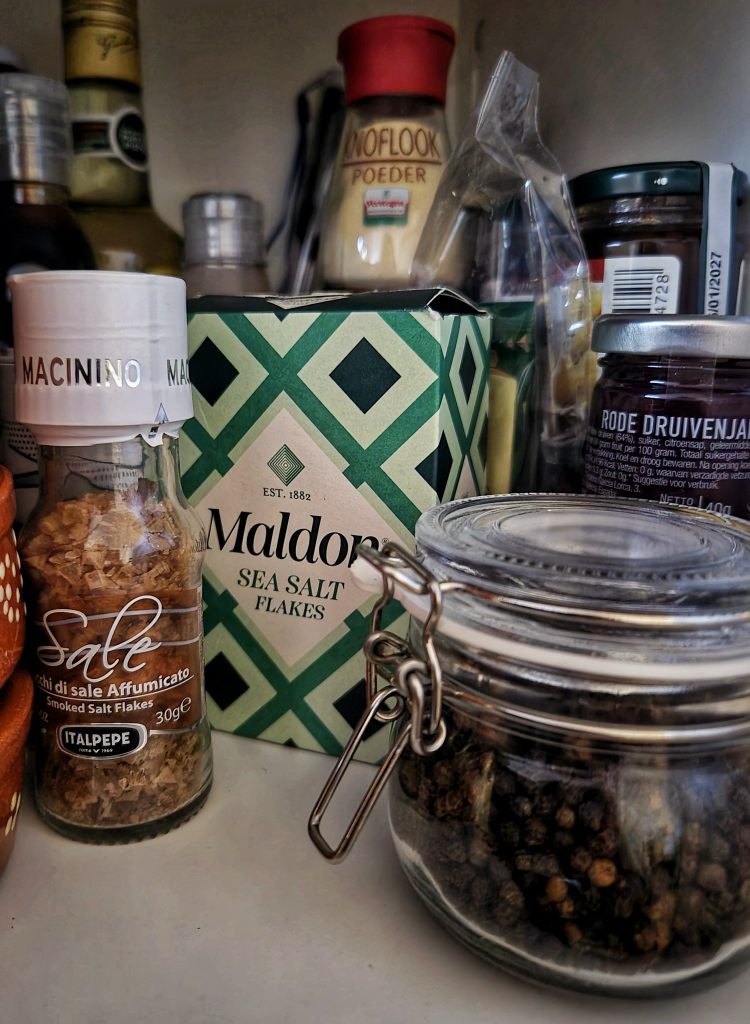
7) Finishing essentials: flaky salt + black peppercorns
This is the smallest upgrade with the biggest impact.
- Flaky salt on tomatoes, roasted veg, eggs, focaccia—it makes everything taste more alive.
- Whole black peppercorns, freshly ground, bring warmth and aroma you just don’t get from pre-ground pepper.
Use it for: the final touch that makes simple food feel intentional.
8) Anchovies (plus colatura di alici)
Even if you think you don’t like anchovies—hear me out. They melt into sauces and disappear, leaving behind pure umami.
Use it for: pasta sauces, greens, roasted vegetables, and anything that needs depth.
A classic move: anchovies + garlic + olive oil as a base for greens, pasta, or roasted vegetables.
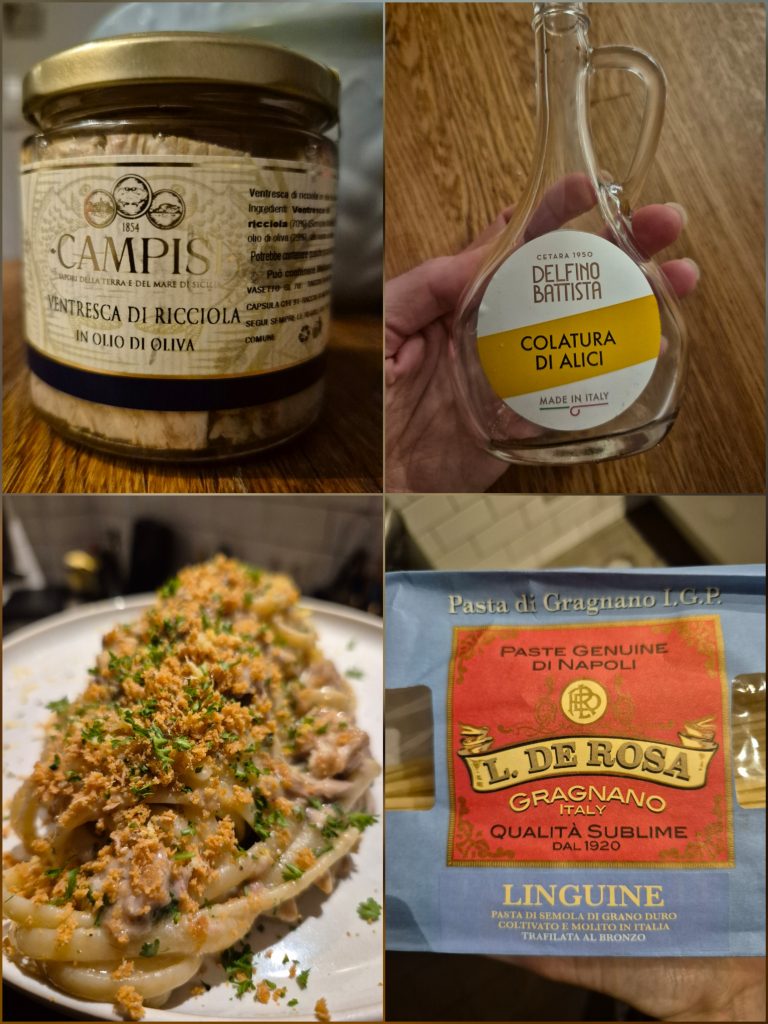
And if you want to go deeper (especially for fish sauces and seafood pasta): colatura di alici. A few drops add that salty, sea-kissed complexity that tastes like you cooked for hours.
9) Capers and/or olives
These are your “instant Mediterranean” button. They add salt, brightness, and that little punch that makes a dish feel restaurant-y.
Use it for: tomato sauces, fish, salads, and quick dressings.
Capers are perfect in tomato sauces, with fish, or tossed into a lemony dressing. Olives are a snack, a topping, and a flavour boost all in one.
10) The “good jars”: pickled vegetables, vegetables in olive oil, quality fish
This is my favourite category because it’s where pantry cooking becomes fun.
Use it for: aperitivo plates, quick pastas, salads, and last-minute “hosting” energy.
- Pickled vegetables (pickles, or Italian-style giardiniera) for crunch and acidity
- Vegetables in olive oil (artichokes & sun-dried tomatoes are a forever favourite)
- High-quality fish in jars/tins to turn a simple pasta, salad, or toast into a real meal
- Sun-dried tomatoes for instant sweetness and depth (especially in pasta, salads, and grain bowls)
These are the ingredients that make a last-minute plate feel like aperitivo at home.
5 easy Italian dinners you can make from these pantry staples
These are the kinds of meals I lean on when I’ve got “nothing” in the fridge—except maybe a leek, a bag of spinach, or a few sad carrots.
- Puttanesca pasta with anchovy base & olives Start with a soffritto (olive oil + onion + garlic). Melt anchovies into the oil, add canned tomatoes/passata, a pinch of sugar if needed, and fresh basil if you have it. Toss with pasta and finish with Parmigiano + pepper. Find my recipe here.
- Pasta e fagioli (the real Italian pantry dinner) Soffritto first, then add beans, tomatoes (or a little passata), water/stock, and a Parm rind while it simmers. Add a tiny pasta shape near the end. Finish with olive oil + black pepper.
- Minestrone-style soup Onion + garlic base, add all vegetables you can find, legumes, and a Parm rind while it cooks. Finish with olive oil. Find my recipe here.
- Risotto with fridge leftovers Onion base, toast the rice, then cook in broth on low heat. Add chopped vegetables of choice (and why not, canned lentils or other legumes). Finish off with mantecatura.
- Aperitivo plate dinner Giardiniera/pickles + olives/capers + artichokes in oil + quality fish + a simple salad (or roasted veg). Drizzle olive oil, flaky salt, done.
A simple “Italian pantry” formula
If you want a quick way to cook like an Italian on a random Tuesday, here’s a formula that works almost every time:
- Olive oil + onions/garlic (base)
- Tomatoes or legumes (body)
- Pasta/rice/barley (comfort)
- Capers/anchovies/colatura/chili (punch)
- Parmigiano + pepper + olive oil (finish)
Optional extras (if you bake or make fresh pasta)
Not everyone makes bread or fresh pasta at home—but if you do, these two flours are worth keeping:
- Strong flour (high-protein) for focaccia and lievitati
- Semola di grano duro for fresh pasta
Final thought
A pantry isn’t about having everything—it’s about having what you’ll actually use.
These staples make it easier to cook with confidence, spend smarter, and eat well even when life is busy. And they leave plenty of room for the seasonal part—the vegetables, herbs, and little market surprises that make each week feel different.
If you’re building your pantry from scratch, start with the “starter pantry” five and add the rest slowly.
If you’re planning a bigger table (or you just want that Italian feeling without doing all the cooking), I also offer Italian-inspired catering in Amsterdam: https://the-balanced-plate.com/catering/
What’s your one pantry staple you can’t live without?